
Connection Over Convenience: What Drives Care Decisions for The PCP Loyalist
Primary care isn't just a medical preference; it's a belief system. More than 160 million Americans believe having a primary care physician isn't optional; it's essential. That belief shapes everything from how they consume healthcare to where they seek information and how they make decisions. Understanding this audience is a first step. Knowing how to reach them is the next.
The Opportunity
Causeway Solutions data identifies over 160 million individuals nationally who believe having a PCP is very necessary, indexed at 1.62 above the national average. That's a dominant population that's rarely spoken to in a way that resonates.
What makes them worth pursuing isn’t just their size. It’s their engagement. Within this audience, 145 million already have a PCP, over 50 million are most likely to seek a second opinion, and nearly 50 million are willing to travel out of market for the right care. These aren’t passive patients. They are advocates for their own health outcomes and they respond to brands and systems that treat them that way.
That gap between 160 million and 145 million? That's 15 million people who believe a PCP is essential but don't yet have one. For health systems, that's just one place to start.
Older, Female, and Deeply Engaged
This audience skews older and female. Adults 65 and older represent 43.5% of the group, compared to 30.9% nationally. Women make up 57.7% of the audience. They are college-educated, married at above-average rates, and concentrated in the $50K–$100K household income band.
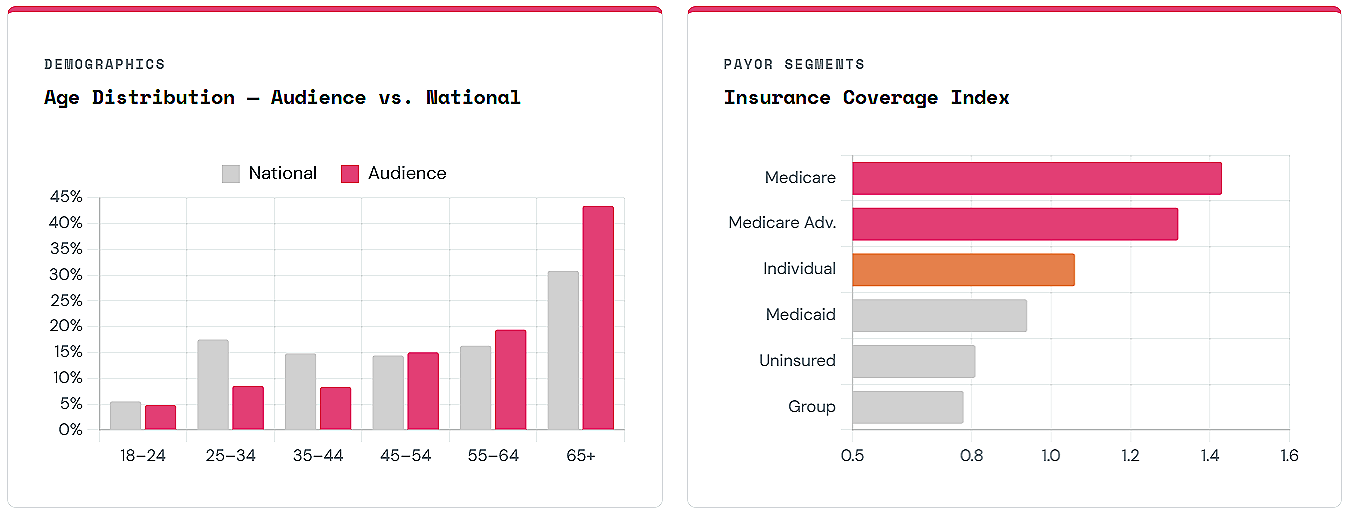
On the payor side, Medicare (1.43) and Medicare Advantage (1.32) index well above the national average, reinforcing the older skew. Individual plan holders also over-index at 1.06, while employer group coverage under-indexes at 0.78, a meaningful signal for anyone building a targeting strategy around plan type.
Healthcare Behaviors
This audience doesn't just believe in primary care; they live it. With a behavior index of 1.62 for believing a PCP is necessary and 1.02 for actually having one, they're not aspirational patients. They're active, engaged participants in the healthcare system.
Their specialty utilization tells a deeper story. Oncology over-indexes at 1.37 and orthopedics at 1.08, pointing to an audience navigating complex, multi-provider care journeys. These aren't one-and-done appointments. These are patients managing real, ongoing health needs across the system.
Over 66 million in this audience consider themselves overweight, making them a meaningful segment for chronic condition management, prevention programs, and wellness messaging. Yet retail health under-indexes at 0.85, a clear signal that convenience isn't the draw. They want the system. The real system.
But the most telling data point isn't clinical. It's motivational.
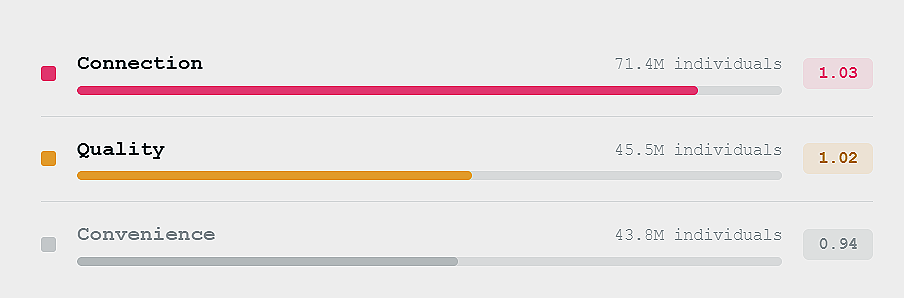
Connection is the #1 driver of care for this audience, they choose providers based on relationships, not logistics, and bring their whole health journey with them.
Media Habits & Where to Find Them
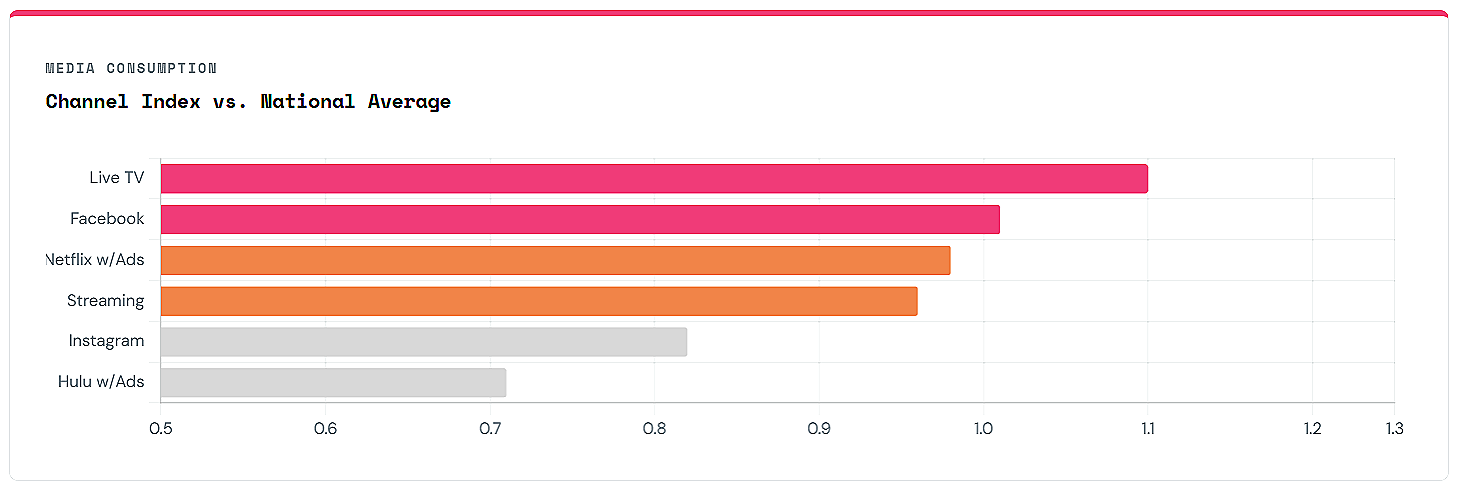
Live TV leads all media channels with an index of 1.10, making it the most efficient entry point for this audience. Facebook follows at 1.01, meaningful at scale even at parity with the national average.
Yes, this audience skews older and that explains some of it. But the strategic implication holds regardless of why. Streaming under-indexes across the board: Netflix with Ads at 0.98, Hulu with Ads at 0.71. Instagram sits at 0.82. In a moment where healthcare budgets are shifting heavily toward digital and streaming, this audience is telling you where they actually are. The demographics made it predictable that this is not a digitally native audience. A cross-channel approach anchored in linear TV and Facebook, with digital for reach extension, will consistently outperform siloed strategies. A strategy built only around where this audience isn't, will underperform.
What The Data Tells You to Do
Whether you're a health system building patient acquisition campaigns, targeting Medicare-eligible adults, or optimizing insurance plan marketing, this audience is not passive. They are active, relationship-driven, and reachable through established channels.
This is where the data points:
Patient Acquisition - Reaching people who believe a PCP is necessary but don't yet have one. The goal is getting them in the door for a first visit. Messaging should lead with the relationship, not the convenience.
Specialist Referral - PCP loyalists are already navigating oncology and orthopedics. Health systems can use this audience to drive awareness of their specialist network and keep referrals within their system.
Chronic Condition Management - Over 66 million in this audience consider themselves overweight. That opens the door for diabetes prevention, cardiovascular health, and weight management program campaigns.
Earning their trust means aligning with their values. Messaging that feels personal and built for the long term will always outperform a one-size-fits-all approach. That's not a creative instinct. It's what the data says to do.
Source: Causeway Solutions Audience Intelligence Report: PCP Necessary. Data derived from proprietary audience modeling.
Offline and online audiences can be built using these data points and thousands more for omni-channel targeting across mail, mobile, and digital. Contact us at info@causewaysolutions.com